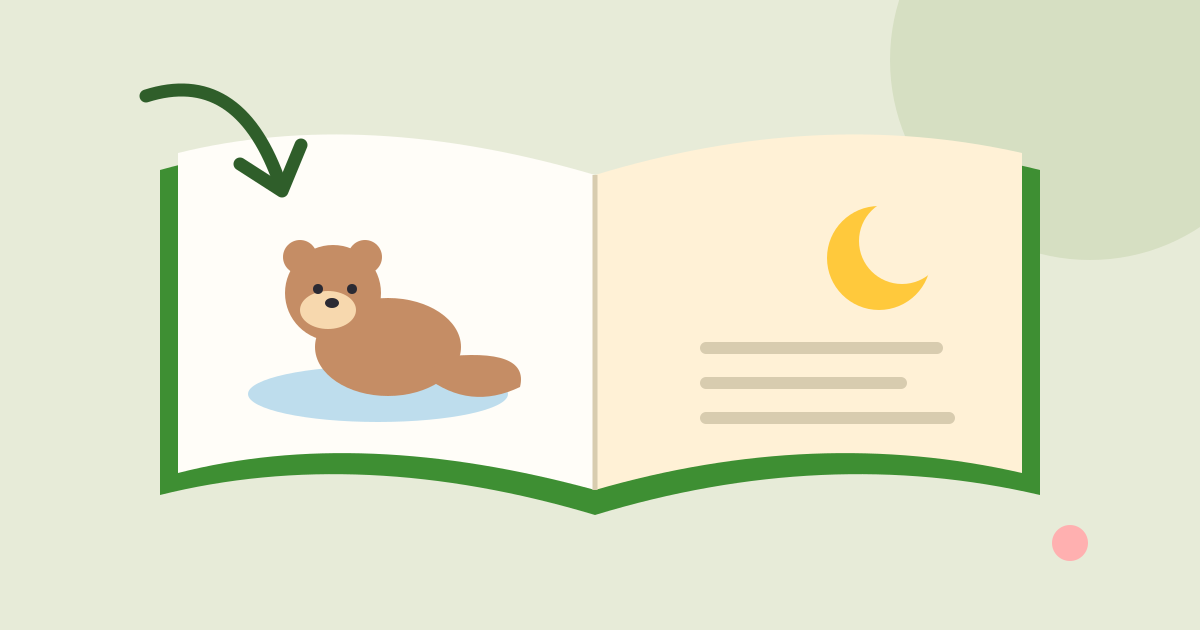
You say “otter.” Your child is looking at the moon in the corner of the page. Before asking them to find the otter, it may help to make sure you're both looking in the same place.
Picture books give you plenty to talk about. They can also put a lot in front of a young reader at once: two scenes, several animals, a little joke in the background. When you want to introduce one unfamiliar word, a small gesture is a useful place to start.
What happened when researchers changed the page?
Flack and Horst ran two experiments with three-and-a-half-year-olds. Children learned fewer new words when searching across two illustrations rather than one. In the second experiment, an adult gesture directed attention to the relevant page. Children given that help learned as well as those seeing one illustration. Read the study.
The study tested particular books and new words, not the value of detailed artwork overall. Our home suggestion is to help your child locate the picture when an unfamiliar word gets lost on the page.
Use the book you already have
Before reading, take a quick look at a page with one word you might explain. Pick something you can clearly indicate. “Otter” is easier to point out than an abstract idea such as “probably.” Both belong in stories; they simply call for different conversations.
When that word arrives in the story, point to the relevant page, then the picture. Keep your finger beside the detail so it doesn't cover it. Say the word in an ordinary sentence and carry on. A book can remain a story even when you pause to explain something.
Later, if your child is still interested, return to the page: “There's our otter again.” You could invite them to show someone else the picture. If they'd rather turn the page, let the story move on.
Pointing at a picture and pointing at print do different jobs
Be clear about your own invitation. Point beside the animal when you're explaining what “otter” means. Point under the printed word when you're showing where the author wrote it. Point to its first letter when you're talking about that letter. Trying all three at once can make a very small moment feel like a lesson plan.
You might choose just the animal today. Our alphabet games offer separate ways to explore print when that is what your child wants to do.
What if the background is the best bit?
Then enjoy it. If your child wants to investigate the tiny moon, you can say, “You found the moon. I hadn't noticed that.” There is room for a conversation you didn't plan. The one-word idea is an option for a shared moment, not a reason to redirect every interesting discovery.
You also don't need to replace your books with plainer ones. Try your own pointing gesture first. If the page still feels crowded, choose a different page another day. Buying a new library is a rather large response to a problem a finger might help with.
A useful question for screens, too
While sitting beside your child, notice whether you can tell which picture the spoken word refers to. That is our suggested way to inspect an activity, not a result this book study established about apps. For more on screens, see what to look for in learning-app animation.